Voice AI
Handle reservations, waitlists, after-hours calls, no-shows and escalations with an AI voice agent, for restaurants in Québec and Canada.
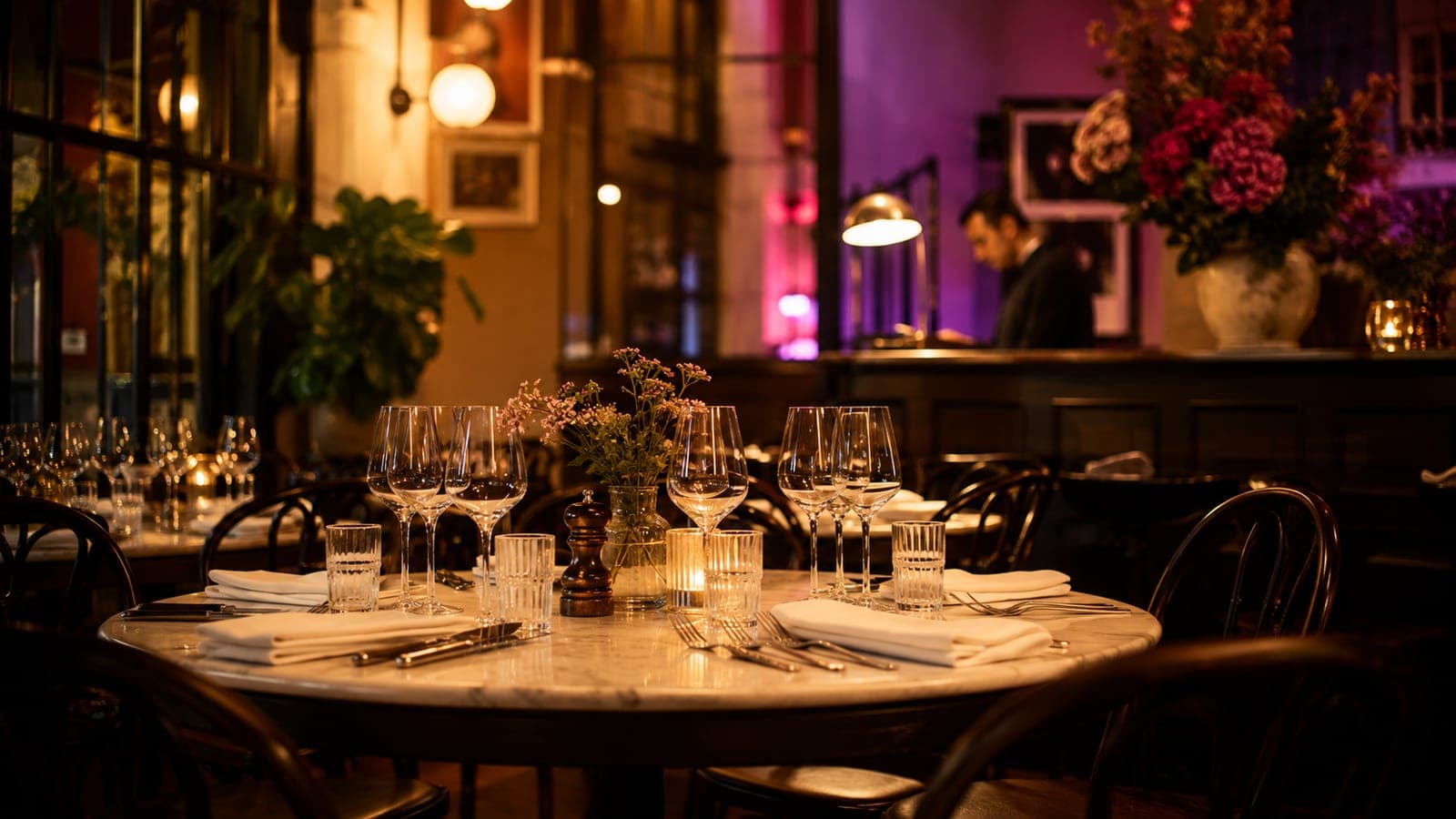
In restaurants, the real win from an AI voice agent isn't to look modern: it's to recover missed calls when the dining room comes before the handset, then convert those calls into reservations, waitlist entries or qualified callback requests. That reading fits a low-margin sector, where Canadian restaurant operating margin was only 3.6% in 2023.
A restaurant phone doesn't carry only reservations. It also carries changes, late arrivals, menu and hours questions, allergies, groups and, depending on the model, takeout. AI is useful precisely because it handles these standardized reasons without monopolizing a human — while greeting, the kitchen-to-floor flow and payments carry on.
operating margin in Canadian restaurants in 2023: every lost cover matters more than before.
Cost of goods up 20.8% and wages up 22.2% between 2019 and 2023.
The real win isn't replacing the host: it's recovering missed calls when the dining room comes before the handset, then converting them.
The problem isn't abstract. In service, the phone competes directly with in-person greeting. For a full-service restaurant, an empty table isn't just one fewer reservation: it's a capacity slot that sometimes can't be resold in time, especially at peak service. The no-show is therefore an operational problem before it's an interface problem.
In Québec, the Office de la protection du consommateur allows a maximum fee of $10 per person for a no-show, but only for reservations of at least two people, with strict obligations: clear information before booking, an easy technological way to cancel, and a reminder or confirmation sent 6 to 48 hours before service with a cancellation link. Reminder, confirmation and cancellation ease aren't extras: they're operational and legal building blocks.
no-shows on average with deposits, per OpenTable, which also make guests 72% less likely to cancel at the last minute.
The phone isn't useless: it must be better structured, confirmed and wired to the right system.
The five most useful call families to automate are the initial reservation, the change (late arrival, cancellation, time change, added guest), the allergy or group, basic information (hours, menu, availability) and, where applicable, takeout. A casual and a fine-dining restaurant don't have the same phone: in casual you mostly automate throughput; in fine dining you mostly automate qualification before confirmation.
A useful voice agent first takes low-ambiguity repetitive tasks. It captures the name, number, date, time, party size and occasion, then writes the request into the reservation tool if the integration exists. It offers another slot when the first isn't available, or moves to the waitlist when the book is closed. On solid automated appointment booking, it doesn't have to invent an answer: it acts as a conversational layer over availability already managed by the tool.
It then handles after-hours calls, often the most profitable use case: the restaurant is closed, no one answers, but the guest is ready to book now. It also answers standardized questions — hours, service windows, menu type, address, kids policy, validated gluten-free options — like a good virtual phone reception employee. And if the restaurant offers takeout, it triages rather than taking the order by hand: it pushes to the online ordering link, more robust than dictating a menu on a busy line.
A voice agent shouldn't settle a complaint, promise a goodwill gesture, comment on an incident or improvise an exception to the reservation policy. Service recovery belongs to a mandated manager, because it needs judgment, sometimes compensation, and often a review of the facts. VIPs, regulars and special events — experiences, birthdays, large groups — must also be human-led: the agent can pre-qualify, but final allocation of space, deposits, menus and exceptions stays with the restaurant.
The escalation rule is simple: anything touching food safety, public reputation, exceptional money or operating policy must escalate.
Food Allergy Canada recommends speaking to the manager or chef for allergies, ideally at a quiet moment.
The right architecture isn't an AI that answers the phone: it's an AI wired to the source of truth for availability. In Canada, OpenTable, Resy, TouchBistro, Lightspeed and Libro offer reservations, waitlist, confirmations and POS integrations. The critical point is syncing table status, ticket and service time: an agent that books without regard for the floor plan or turns quickly creates more problems than it solves. For SMS, Twilio documents its Canadian guidelines; it mainly serves confirmations, reminders and waitlist notices.
Four to five metrics matter. Covers saved — calls that would have been lost then converted — is closest to the real problem. The no-show rate, ideally by channel, measures the effect of reminders and deposits. The after-hours calls handled rate measures answered then turned into action. Add average time per turn and escalation rate, which tell you whether the setup is too cautious or too permissive. Cutting no-shows and lost calls is a direct lever for cutting missed calls.
An effective rollout takes four steps, and starts from the reality of the calls rather than the choice of a voice.
A thirty-to-sixty-day pilot is enough to see if the agent removes real friction or just shifts the work.
For the intake and booking logic behind this agent, see how Bookia structures reception and appointment booking and how a virtual employee works.
No. It mainly handles simple reservations, changes, information requests, the waitlist and after-hours calls. Complaints, exceptions, VIPs and management decisions must stay human.
It can capture the information and add it to the reservation, but severe allergies should be re-verified by a human, ideally a manager or the kitchen.
Often yes, if the integration exists for your market and tech stack. You need to validate the sync of reservations, tables, statuses and messages.
As soon as technology collects personal information, a privacy policy is required. The restaurant remains responsible for the data even if a vendor or an AI solution is involved.
Read next
Our commitment: a product that lives up to your expectations. Set up in a few steps.